







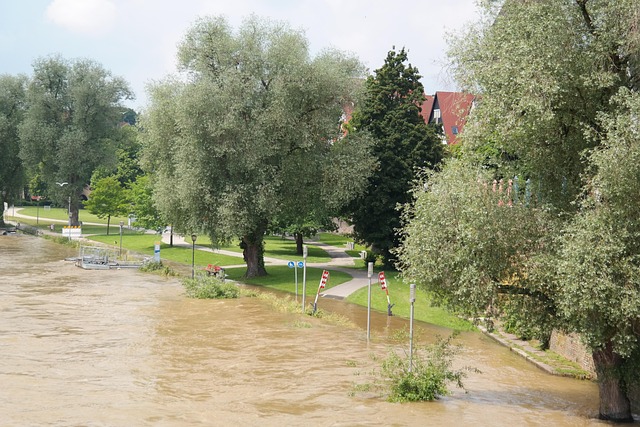
In real estate, understanding flood risk is paramount for responsible management and investment. Climate change has heightened flooding concerns globally. Professionals must assess historical data, topography, drainage, and water body proximity to predict future risks. Flood insurance, covering costs beyond standard home policies, is mandatory in high-risk areas. Key elements include distinguishing policy types, thorough risk assessment, purchasing up to 25% of property value in coverage, and regular policy reviews. Real estate agents guide clients through these processes, fostering trust and protecting investments. Integrating flood insurance into standard procedures reduces financial losses and strengthens community resilience.
In the dynamic real estate landscape, flood insurance stands as an indispensable component for professionals navigating the complexities of property transactions. As climate change intensifies, understanding the nuances of flood insurance is no longer a luxury but a necessity. This comprehensive guide aims to demystify this critical aspect, equipping real estate experts with the knowledge to make informed decisions and offer valuable insights to clients. We delve into the intricacies of flood zones, policy coverage, and risk assessment, ensuring professionals can confidently steer their clients through this vital process, thereby fostering trust and securing sound investments.
Understanding Flood Risk in Real Estate

Understanding Flood Risk in Real Estate is a critical aspect of responsible property management and investment. As climate change continues to alter weather patterns, flooding has become an increasingly prevalent concern for real estate professionals worldwide. According to the National Oceanic and Atmospheric Administration (NOAA), severe storms and hurricanes have led to record-breaking flooding events in recent years, affecting millions of people and causing billions of dollars in damage. Therefore, it is essential for agents, brokers, and investors to comprehend the nuances of flood risk assessment and the role of flood insurance in mitigating potential losses.
Real estate professionals should approach flood risk as a multi-faceted challenge. It involves not only understanding historical flooding data but also considering future scenarios based on climate change projections. For instance, areas previously considered low-risk may now face heightened vulnerability due to changing environmental conditions. A thorough analysis should incorporate local topography, drainage patterns, and proximity to water bodies. Moreover, real estate professionals must be aware of the specific flood insurance borrower requirements set by federal agencies like FEMA (Federal Emergency Management Agency). These requirements often dictate the level of coverage needed based on location-specific risk assessments.
Flood insurance is a natural tool for managing this risk. It provides financial protection to homeowners and business owners, covering repairs or rebuilding costs beyond what standard home insurance policies offer. However, obtaining flood insurance isn’t always straightforward. Lenders typically require borrowers in high-risk areas to purchase flood insurance as part of the loan conditions. Real estate professionals should guide their clients through this process, ensuring compliance with regulatory requirements while helping them understand their coverage options. This includes being knowledgeable about different policy types and the National Flood Insurance Program (NFIP), which offers a standardized approach to flood coverage in the U.S.
In light of these considerations, real estate professionals have a crucial role in educating buyers, sellers, and investors about flood risk and advocating for proactive measures to mitigate its impact. By staying informed on the latest research, engaging with local community resources, and facilitating open conversations about flood insurance, agents can ensure that their clients are well-prepared for potential flooding events, minimizing financial exposure and protecting their investments.
Navigating Flood Insurance Policies and Coverage
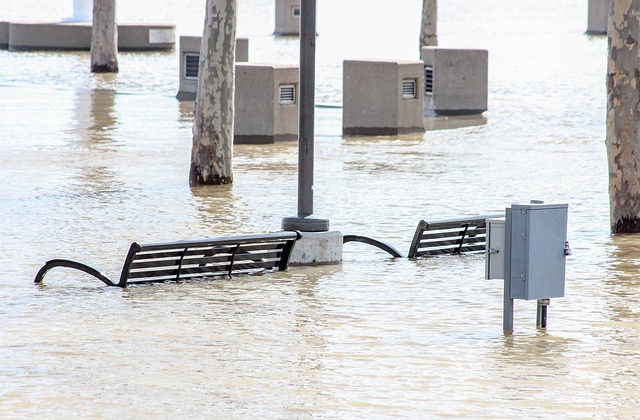
Navigating flood insurance policies and coverage is a critical aspect of responsible real estate practice, particularly in regions prone to flooding. As professionals, understanding these nuances ensures clients are adequately protected. Flood insurance, flood insurance borrower requirements play a pivotal role in mitigating financial risks associated with this natural disaster. The primary goal is to provide comprehensive coverage that meets the unique needs of both homeowners and lenders.
One key element to consider is the distinction between different policy types. Many standard home insurance policies do not cover flooding, emphasizing the need for specialized flood insurance borrower requirements. These include National Flood Insurance Program (NFIP) policies, which are underwritten by federal insurance providers and offer protection against losses caused by floods. Additionally, private insurers may offer flood coverage as an add-on to regular policies, allowing for more tailored protection. It’s essential to review policy exclusions and limitations to ensure the best fit for each client.
Risk assessment is another vital aspect. Real estate professionals should guide clients through a thorough evaluation of their property’s vulnerability to flooding. This involves examining historical flood data, topography, water flow patterns, and building specifics. For instance, properties in low-lying areas or near rivers are at higher risk. By accurately assessing these factors, agents can advise borrowers on suitable coverage levels. According to the NFIP, flood insurance borrower requirements often involve purchasing policies that cover up to 25% of the property’s value for residential properties. However, adjustments may be necessary based on individual circumstances.
Regular policy reviews are also recommended. As flood risks can change over time due to development or environmental shifts, it’s crucial to update flood insurance borrower requirements. This ensures clients maintain adequate coverage. Real estate professionals who stay informed about local flooding trends and collaborate closely with insurance providers can offer expert guidance, fostering trust and ensuring clients’ interests are well-protected.
Assessing Property for Flood Insurance Eligibility

Assessing a property’s eligibility for flood insurance is a critical step in the real estate transaction process, especially in areas prone to flooding. This involves a meticulous evaluation of various factors that influence the risk of flood damage. According to the National Oceanic and Atmospheric Administration (NOAA), nearly 20% of U.S. residents live in high-risk flood zones, making this assessment an indispensable part of responsible lending practices.
Real estate professionals play a pivotal role in guiding buyers and lenders through this process. They must be adept at analyzing property characteristics to determine potential flood risks. This includes assessing proximity to bodies of water, terrain elevation, and infrastructure like levees or floodwalls. For instance, properties located within 100 feet of a river or stream are categorized as high-risk by the Federal Emergency Management Agency (FEMA), making them ineligible for standard flood insurance policies.
Understanding flood insurance borrower requirements is another key aspect. Lenders often mandate flood insurance for borrowers in high-risk areas to mitigate financial exposure. These policies protect not only the lender but also the borrower, ensuring they’re compensated for flood-related damages. However, properties with historical flooding issues or those in special flood hazard zones (SFHAs) may require more specialized coverage, increasing premiums and complicating the underwriting process.
To ensure accuracy, real estate professionals should consult FEMA’s maps and data, which provide detailed information on flood zones and risk levels. They can also engage with local expertise and insurance providers to gain insights into specific challenges and solutions within their areas. By integrating these practices, professionals can facilitate informed decisions regarding flood insurance, ensuring both the safety and security of transactions in potentially vulnerable regions.
The Role of Agents: Guiding Clients Through Flood Insurance

Real estate agents play a pivotal role in guiding clients through the complex landscape of flood insurance. With an ever-changing regulatory environment and varying levels of risk across properties, it’s crucial for agents to possess a deep understanding of this niche area. Their expertise can significantly impact client decisions, ensuring they’re adequately prepared for potential flooding events.
Agents act as trusted advisors, helping buyers and sellers navigate the intricacies of flood insurance borrower requirements. This involves assessing property vulnerabilities, explaining various coverage options, and offering insights into risk mitigation strategies. For instance, agents should educate clients about the National Flood Insurance Program (NFIP), which provides a standard set of insurance options for properties in high-risk areas. By delving into specific details like elevation certificates and flood zone determinations, agents empower their customers to make informed choices.
A practical approach includes assisting clients in understanding the scope of coverage, deductibles, and potential exclusions. Agents should also encourage proactive measures such as installing flood safeguards or elevating critical components of a structure. By fostering open dialogue, real estate professionals can ensure that borrowers are fully aware of their responsibilities and the importance of maintaining adequate flood insurance. This proactivity fosters trust and protects both the agent’s reputation and the client’s investment.
Moreover, staying abreast of industry trends and updates in flood insurance policies is essential. Agents who demonstrate a commitment to continuous learning can offer valuable insights, ensuring clients receive up-to-date information. This knowledge enables agents to provide tailored guidance, addressing unique challenges posed by changing climate patterns and evolving insurance regulations. Ultimately, the agent’s role is transformative, helping clients navigate this vital aspect of real estate with confidence and peace of mind.
Case Studies: Success Stories of Flood Insurance Adoption

In the realm of real estate, managing risk is paramount, especially when it comes to unforeseen events like floods. Case studies showcasing successful flood insurance adoption offer invaluable insights for professionals navigating this critical aspect of property ownership and management. These stories highlight the transformative power of proactive measures and their profound impact on mitigating financial losses and fostering community resilience.
One notable example involves a coastal development in Texas, where developers mandated comprehensive flood insurance policies for all homeowners. This proactive step significantly reduced claims during subsequent severe storm seasons, attesting to the effectiveness of such measures. By requiring flood insurance, borrowers not only protect their investments but also contribute to a more robust financial safety net for the entire community. This strategy aligns with the primary objective of flood insurance—natural disaster risk reduction—and serves as a blueprint for other real estate professionals worldwide.
Moreover, these success stories underscore the importance of educating buyers and tenants about flood insurance borrower requirements. According to recent data, adoption rates climb when individuals comprehend their responsibilities and potential risks. For instance, in areas prone to seasonal flooding, mandatory flood insurance policies can lead to more informed decision-making among borrowers. By integrating this practice into standard procedures, real estate professionals ensure that clients are adequately protected, fostering trust and long-term relationships based on sound risk management strategies.